

Urban ropeways (Sanatorium, Lejubani, Naguti, Muxadze)
The project
Urban ropeways

Technical
specifications

Lines

Total length

Maximal elevation

Capacity

Speed

Number of cabins

Number of passengers per cabinssagers par véhicule

People per day

Number of stations
POMA, innovation
for the project
installation images

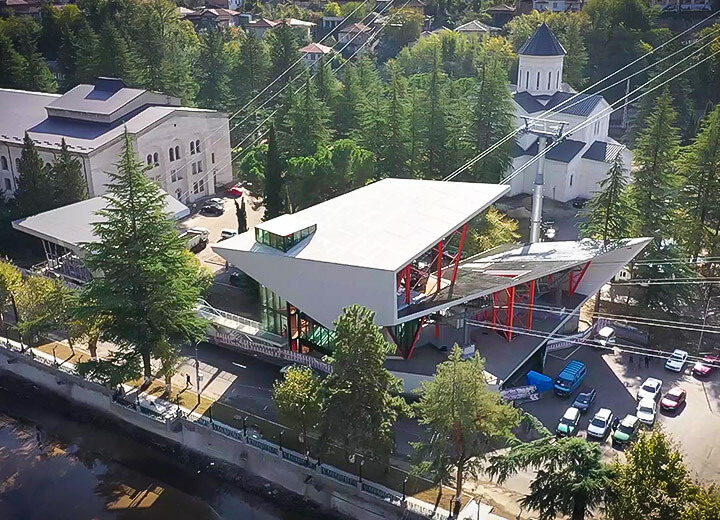

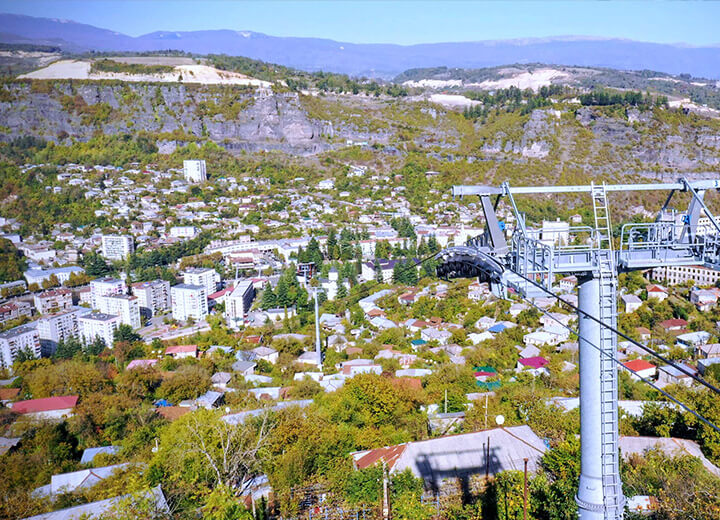

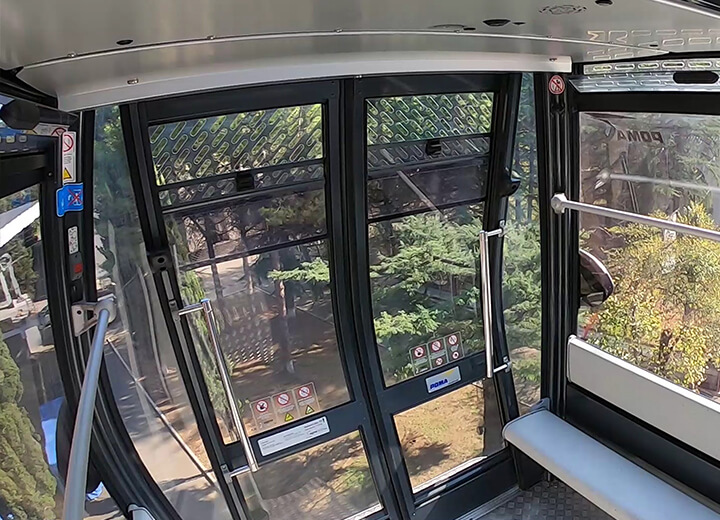

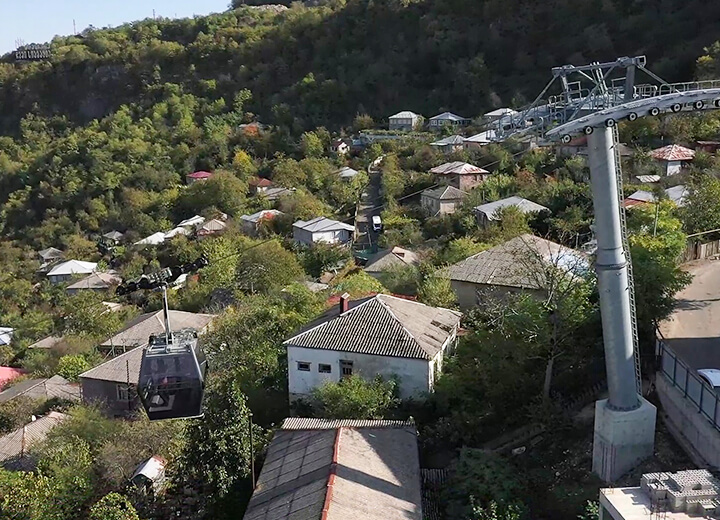

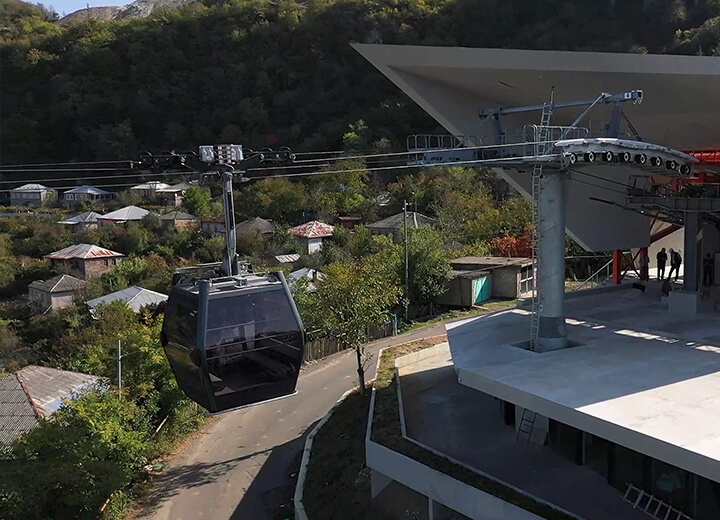

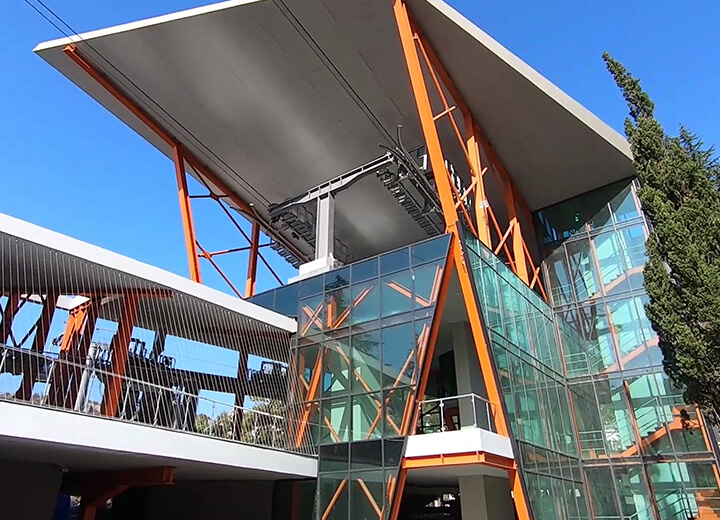
Urban ropeways of Chiatura
They talk about it
Responsable ingénierie système

urban realisations :

Angelo cable car (Ajaccio)
AJACCIO – ANGELO
En octobre 2025, la CAPA a inauguré le nouveau téléporté urbain d’Ajaccio, construit par POMA. Long de 3km, il permet de relier Mezzavia, le secteur de Saint-Joseph et le bord de mer en seulement 12 minutes.
Read
Antananarivo
Madagascar – Antananarivo – 2024
In Antananarivo, the capital of Madagascar, the fifth largest island in the world, the population has increased tenfold in 60 years to reach 3.5 million inhabitants. As part of a sustainable restructuring of the city’s mobility system, the first urban cable car line was installed to carry over 40,000 passengers a day.
Read
le Valléen
France – Saint Gervais – 2024
Located at the foot of Mont Blanc, Saint-Gervais-les-Bains is increasingly focusing on sustainable mobility solutions. The Le Valléen 10-seater gondola lift, whose bottom station is directly linked to the du Fayet train station, offers a fast, multimodal link to the center of Saint-Gervais. The new lift is already very popular with students, but is also…
Read
Santiago
Dominican Republic – Santiago de los caballeros – In progress
Santiago de los Caballeros, the second-largest city in the Dominican Republic, is currently building the SITS (Santiago Integrated Transport System), a sustainable mobility system that includes a monorail, bicycles, electric buses and a 12-passenger, almost four-kilometer-long gondola.
Read
P Line – Metrocable
Colombia – Medellin – 2021
A social and economic link, Medellin’s Metrocable is the emblem of a city on the move. The 6th line of the metrocable took off in 2022 to extend its public transport network, serving sustainable and soft mobility
Read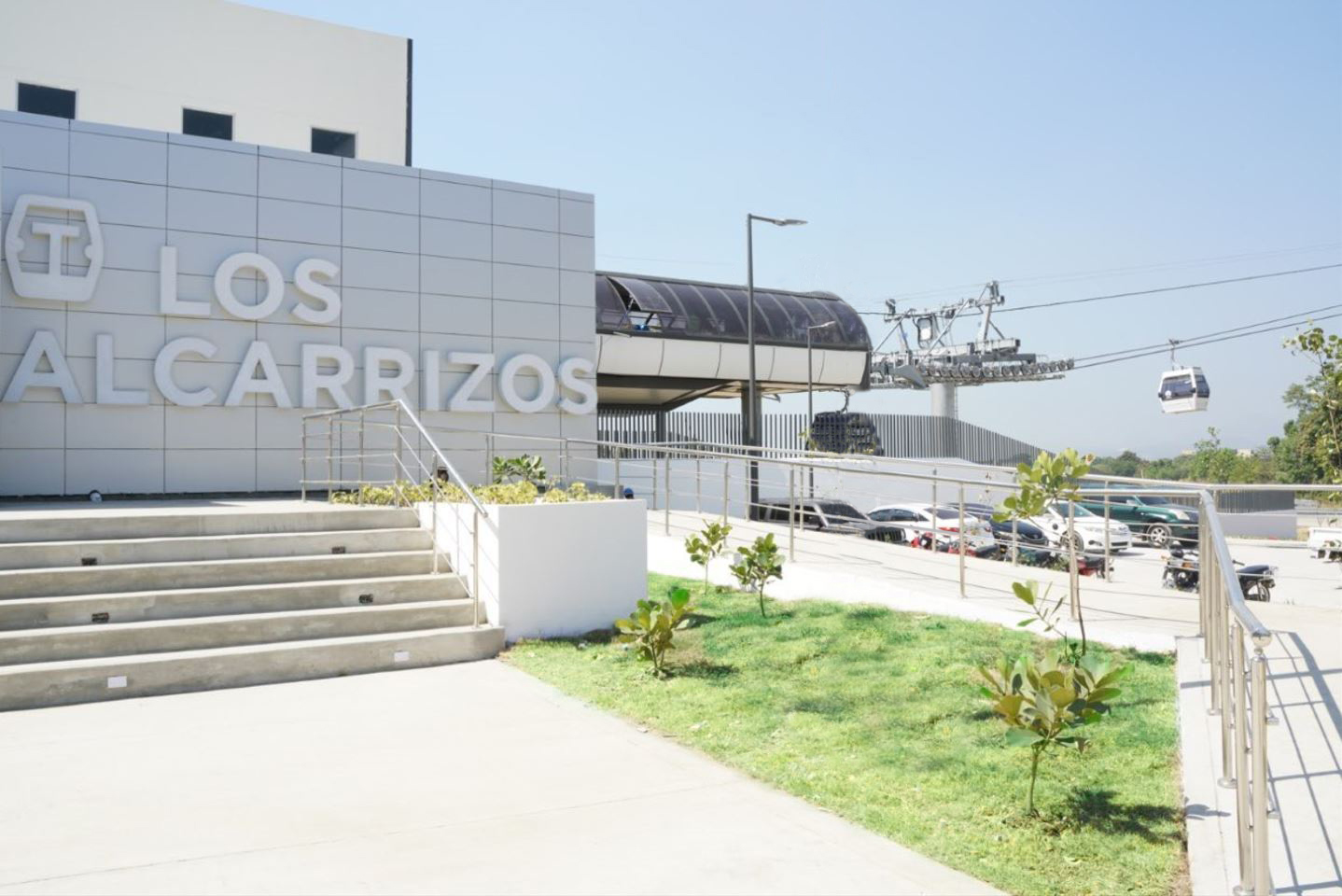
Los Alcarrizos
Dominican Republic – Santo Domingo – 2022
The city of Santo Domingo inaugurates its new urban aerial tramway line, the fastest in the world. The monocable system criss-crosses the sky over a 4.2-km stretch and serves four stations, offering a perfect soft mobility solution between the city centre and the suburbs.
Read
Citadel of Namur gondola lift
Belgique – Namur – 2021
In Namur, Belgium, the ropeway connects the city centre to the Citadel Esplanade, flying over the river Sambre and the ramparts. Tourists and locals alike enjoy the experience of a silent trip with a breathtaking viewpoint. An ecological mode of travel, it blends harmoniously into its environment, by virtue of its modern architecture that respects…
Read
Aerovia
Equateur – Guayaquil – ongoing project
In order to improve the flow of daily traffic between Duran and Guayaquil, Ecuador’s economic capital, and offer an alternative solution for crossing the estuary, the local authorities have opted for ropeway transportation. Ecuador’s first urban gondola lift links Duran and Guayaquil, providing fast, smooth travel throughout the transport network for 40,000 passengers a day.
Read
Tizi Ouzou
Algeria – Tizi Ouzou – 2019
POMA has developed a three-section aerial transport line with a total length of 5 km consisting of two gondola lifts and an aerial ropeway in Tizi Ouzou, a town located 100 km from Algiers.
Read
Airtram New York
USA – New York – 2010
With the installation of this ultra-modern aerial tramway, POMA has provided New Yorkers with the most advanced technology in urban ropeway transportation. It is 960 m long and connects Roosevelt Island to Manhattan in just three minutes, passing over the East River in great comfort with unique views of New York through the huge windows…
Read
Téléo
France – Toulouse – 2021
More than 8,000 passengers will board the cabins of the Téléo tricable ropeway every day. Part of the Toulouse Agglomeration’s transport network, it crosses a river and travels over a hill to link three major hubs of activity in the south of Toulouse: the University Cancer Institute, Rangueil Hospital and Paul Sabatier University.
Read
Urban ropeways (Sanatorium, Lejubani, Naguti, Muxadze)
The project
Technical
specifications
Lines
Total length
Maximal elevation
Capacity
Speed
Number of cabins
Number of passengers per cabinssagers par véhicule
People per day
Number of stations
POMA, innovation
for the project
installation images
They talk about it
Arkhyz gondola lift
Deputy Managing Director of JSC NCR

urban realisations :

3S Jandri
France – Les Deux Alpes – 2024
For faster, more comfortable and safer travel, SATA has made a particularly innovative choice by investing in a superb 2-section tricable gondola lift (3S). This installation marks a major step forward in the modernization of the Deux-Alpes ski area, and is set to become a benchmark in the mountain world.
Read
Transarc
France – Les Arcs – 2024
The new 10-seater Villaroger gondola lift, located in the Villaroger sector of the Les Arcs ski area, represents a major step forward in the modernization of the ski area.
Read
Planchamp
FRANCE – VALMOREL – 2023
In the heart of Valmorel, at the gateway to the Tarentaise Valley in the Hautes-Alpes, the Sofival group has installed a new gondola lift that operates all year round, connecting the village to the rest of the ski area via the Combe de Beaudin.
Read
Crémaillère Express
The spa town of Luchon, in the heart of the Pyrenees, has a new gondola lift linking it to its ski resort at an altitude of 1,800 meters. The old gondola lift had already been in operation for 30 years, and the new Luchon Crémaillère Express gondola brings with it the benefits of a new…
Read
American Eagle
United States – Copper Mountain, Colorado – 2018
How the west was won: the American Eagle is the first TELEMIX® ropeway installed in the United States by the POMA Group. Passengers settle into one of the six-seater chairs and eight-seater gondolas to reach the top of the slopes or the high-altitude restaurant.
Read
Grangettes
France – Courchevel – 2018
The Les 3 Vallées company entrusted POMA with the construction of the new emblematic gondola lift of Les Grangettes. A true link between Courchevel Village and Courchevel 1850, the gondola lift is operated every day until 11 pm. It is a busy link and has opened the door to peri-urban rope transport in the mountains.
Read
Meihuashan
Meihuashan Lift-1 et 2
In China, the Meihuashan gondola lift is a valley elevator at the heart of a year-round tourism project
Read
Treeline Cirque
United States – Squaw Valley / Alpine Meadows (California) – 2019
Leitner Poma of America, a long-standing partner of the Alpine Meadows ski resort, replaced the 1996 Hot Wheels fixed-grip chairlift this year with a new higher-performance 4-seater detachable chairlift, and took the opportunity to improve the route.
Read
Skyvall
France – Loudenvielle Peyragudes – 2019
The “Skyvall” gondola lift is a link between the village of Loudenvielle, with its lake and its recreational spa, and the ski resort of Peyragudes. Since the summer of 2020, it has helped improve the year-round appeal of this beautiful valley in the Pyrenees.
Read
Ski Indoor Dubaï
United Arab Emirates – Dubai – 2005
The Souk Al Nakheel fixed chairlift is the main installation of Ski Dubai, the first indoor ski centre of its kind in the Persian Gulf region, and the most famous in the world.
Read
Cuiyunshan
China – Cuiyunshan – 2017
A superb 6/8 Telemix®, combining 6-seater chairs with protective hoods and 8-person Diamond cabins, was deployed in Cuiyunshan, a new station near Chongli, four hours by road from Beijing.
Read
Urban ropeways (Sanatorium, Lejubani, Naguti, Muxadze)
The project
in motion

Technical
specifications
Lines
Total length
Maximal elevation
Capacity
Speed
Number of cabins
Number of passengers per cabinssagers par véhicule
People per day
Number of stations
POMA, innovation
for the project
installation images
urban realisations :
3S Jandri
France – Les Deux Alpes – 2024
For faster, more comfortable and safer travel, SATA has made a particularly innovative choice by investing in a superb 2-section tricable gondola lift (3S). This installation marks a major step forward in the modernization of the Deux-Alpes ski area, and is set to become a benchmark in the mountain world.
Read
Transarc
France – Les Arcs – 2024
The new 10-seater Villaroger gondola lift, located in the Villaroger sector of the Les Arcs ski area, represents a major step forward in the modernization of the ski area.
Read
Planchamp
FRANCE – VALMOREL – 2023
In the heart of Valmorel, at the gateway to the Tarentaise Valley in the Hautes-Alpes, the Sofival group has installed a new gondola lift that operates all year round, connecting the village to the rest of the ski area via the Combe de Beaudin.
Read
Crémaillère Express
The spa town of Luchon, in the heart of the Pyrenees, has a new gondola lift linking it to its ski resort at an altitude of 1,800 meters. The old gondola lift had already been in operation for 30 years, and the new Luchon Crémaillère Express gondola brings with it the benefits of a new…
Read
American Eagle
United States – Copper Mountain, Colorado – 2018
How the west was won: the American Eagle is the first TELEMIX® ropeway installed in the United States by the POMA Group. Passengers settle into one of the six-seater chairs and eight-seater gondolas to reach the top of the slopes or the high-altitude restaurant.
Read
Grangettes
France – Courchevel – 2018
The Les 3 Vallées company entrusted POMA with the construction of the new emblematic gondola lift of Les Grangettes. A true link between Courchevel Village and Courchevel 1850, the gondola lift is operated every day until 11 pm. It is a busy link and has opened the door to peri-urban rope transport in the mountains.
Read
Arkhyz
Russia – Arkhyz – 2018
Northern Caucasus Resort is continuing its development project, which began in 2011 in the Caucasus mountains, and has an impressive 10-seat 3.8 km gondola lift with 3 sections on its north slope.
Read
Meihuashan
Meihuashan Lift-1 et 2
In China, the Meihuashan gondola lift is a valley elevator at the heart of a year-round tourism project
Read
Treeline Cirque
United States – Squaw Valley / Alpine Meadows (California) – 2019
Leitner Poma of America, a long-standing partner of the Alpine Meadows ski resort, replaced the 1996 Hot Wheels fixed-grip chairlift this year with a new higher-performance 4-seater detachable chairlift, and took the opportunity to improve the route.
Read
Skyvall
France – Loudenvielle Peyragudes – 2019
The “Skyvall” gondola lift is a link between the village of Loudenvielle, with its lake and its recreational spa, and the ski resort of Peyragudes. Since the summer of 2020, it has helped improve the year-round appeal of this beautiful valley in the Pyrenees.
Read
Ski Indoor Dubaï
United Arab Emirates – Dubai – 2005
The Souk Al Nakheel fixed chairlift is the main installation of Ski Dubai, the first indoor ski centre of its kind in the Persian Gulf region, and the most famous in the world.
Read
Urban ropeways (Sanatorium, Lejubani, Naguti, Muxadze)
The project
Urban ropeways
Technical
specifications
Lines
Total length
Maximal elevation
Capacity
Speed
Number of cabins
Number of passengers per cabinssagers par véhicule
People per day
Number of stations
POMA, innovation
for the project
installation images
urban realisations :
Angelo cable car (Ajaccio)
AJACCIO – ANGELO
En octobre 2025, la CAPA a inauguré le nouveau téléporté urbain d’Ajaccio, construit par POMA. Long de 3km, il permet de relier Mezzavia, le secteur de Saint-Joseph et le bord de mer en seulement 12 minutes.
Read
Antananarivo
Madagascar – Antananarivo – 2024
In Antananarivo, the capital of Madagascar, the fifth largest island in the world, the population has increased tenfold in 60 years to reach 3.5 million inhabitants. As part of a sustainable restructuring of the city’s mobility system, the first urban cable car line was installed to carry over 40,000 passengers a day.
Read
le Valléen
France – Saint Gervais – 2024
Located at the foot of Mont Blanc, Saint-Gervais-les-Bains is increasingly focusing on sustainable mobility solutions. The Le Valléen 10-seater gondola lift, whose bottom station is directly linked to the du Fayet train station, offers a fast, multimodal link to the center of Saint-Gervais. The new lift is already very popular with students, but is also…
Read
Santiago
Dominican Republic – Santiago de los caballeros – In progress
Santiago de los Caballeros, the second-largest city in the Dominican Republic, is currently building the SITS (Santiago Integrated Transport System), a sustainable mobility system that includes a monorail, bicycles, electric buses and a 12-passenger, almost four-kilometer-long gondola.
Read
P Line – Metrocable
Colombia – Medellin – 2021
A social and economic link, Medellin’s Metrocable is the emblem of a city on the move. The 6th line of the metrocable took off in 2022 to extend its public transport network, serving sustainable and soft mobility
Read
Los Alcarrizos
Dominican Republic – Santo Domingo – 2022
The city of Santo Domingo inaugurates its new urban aerial tramway line, the fastest in the world. The monocable system criss-crosses the sky over a 4.2-km stretch and serves four stations, offering a perfect soft mobility solution between the city centre and the suburbs.
Read
Citadel of Namur gondola lift
Belgique – Namur – 2021
In Namur, Belgium, the ropeway connects the city centre to the Citadel Esplanade, flying over the river Sambre and the ramparts. Tourists and locals alike enjoy the experience of a silent trip with a breathtaking viewpoint. An ecological mode of travel, it blends harmoniously into its environment, by virtue of its modern architecture that respects…
Read
Aerovia
Equateur – Guayaquil – ongoing project
In order to improve the flow of daily traffic between Duran and Guayaquil, Ecuador’s economic capital, and offer an alternative solution for crossing the estuary, the local authorities have opted for ropeway transportation. Ecuador’s first urban gondola lift links Duran and Guayaquil, providing fast, smooth travel throughout the transport network for 40,000 passengers a day.
Read
Chiatura
Géorgie – Chiatura – 2020
To retrofit its urban overhead transport system, the city of Chiatura chose POMA. Four small urban ropeways, developed specifically to satisfy the needs in terms of capacity and the constraints regarding distances, have replaced some (very) old Russian ropeways.
Read
Tizi Ouzou
Algeria – Tizi Ouzou – 2019
POMA has developed a three-section aerial transport line with a total length of 5 km consisting of two gondola lifts and an aerial ropeway in Tizi Ouzou, a town located 100 km from Algiers.
Read
Airtram New York
USA – New York – 2010
With the installation of this ultra-modern aerial tramway, POMA has provided New Yorkers with the most advanced technology in urban ropeway transportation. It is 960 m long and connects Roosevelt Island to Manhattan in just three minutes, passing over the East River in great comfort with unique views of New York through the huge windows…
Read